History to be told
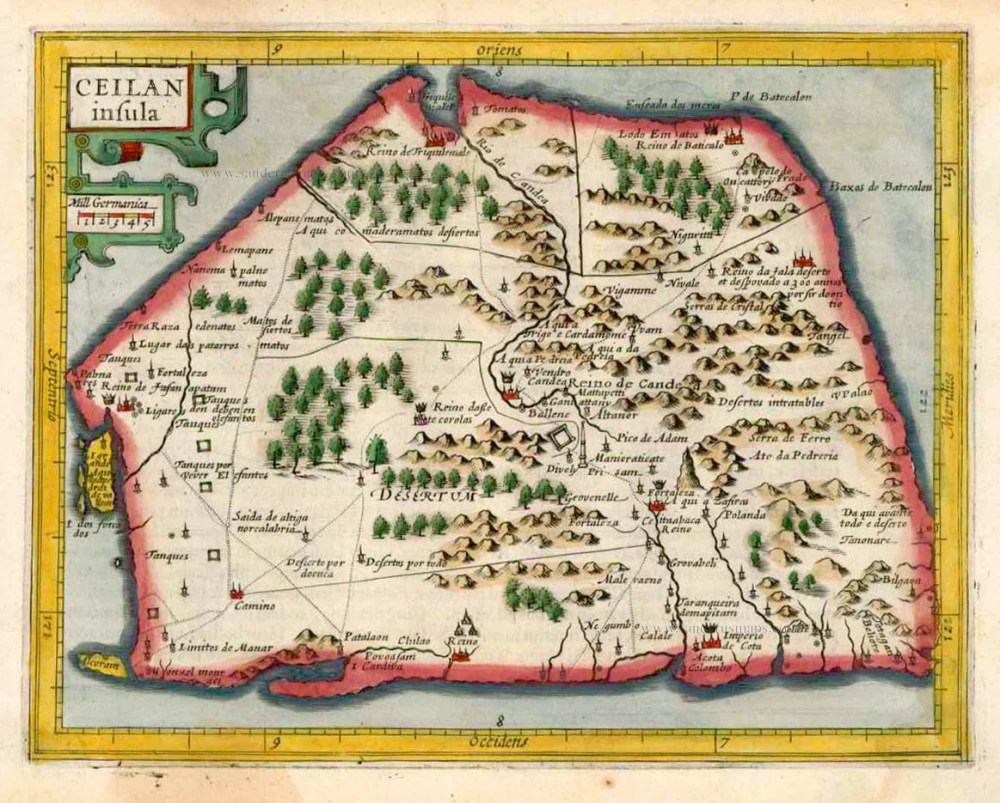
It is well known that Sri Lanka’s history extends beyond 2,500 years. However, recent discoveries have revealed that our history actually dates back over 125,000 years.Significant findings in the Boondala and Pathirajawela areas, including necklaces, coins, and pottery, demonstrate that even in those ancient times, we were a highly civilized nation.
First Rulers
Most historians acknowledge King Vijaya, an Indian prince, as the first king of Sri Lanka. Following him, King Panduwasdeva and King Abhaya ruled the land. Notably, King Abhaya’s sister, Chithra—more commonly known as Unmada Chithra—stands out as an iconic princess in Sri Lankan history. Her son, King Pandukabhaya, holds particular significance as the first Sri Lankan king of purely local descent. He was a remarkable ruler who advanced agriculture, strengthened the economy, and established Anuradhapura as his capital, transforming it into a thriving city.
There have been hundreds of kings who have ruled this great country. Among them, two of the most significant are King Dutugemunu, who united the nation as one, and King Kashyapa, renowned for his extraordinary architectural achievement at Sigiriya, a marvel that continues to astonish the world today.
Invasions
“Now, let us turn our attention to the three foreign invasions that impacted Sri Lanka, beginning with the Portuguese invasion.The Portuguese arrived in our land in 1505, and by 1597, King Dharmapala signed a treaty that handed over the coastal areas to them.
One of the most decisive moments in Sri Lankan history was the Battle of Mulleriyawa, which marked the worst defeat for the Portuguese during that time. According to local chronicles, the marshlands of Mulleriyawa turned red with blood after the annihilation of the Portuguese forces.
The Portuguese fought numerous battles to capture the Kandyan kingdom , including the battles of Dhanture, Balana, Randenigala, and Gannoruwa. In each of these encounters, the resilient locals successfully defeated the Portuguese.”
Continuing
The Sri Lankans invited the Dutch to assist in their fight against the Portuguese. They signed the Kandyan Treaty of 1638 with Rajasinghe II and soon embarked on a war against their common enemy. Following the departure of the Portuguese, the Dutch took control of the territories previously governed by them.
Today, Sri Lankans of Dutch descent, known as the Burgher people, can still be found in Sri Lanka. Additionally, several words from the Dutch language, such as “kopi,” “koppaya,” “janelaya,” and “kanthoruwa,” continue to be used in Sinhala language.
The British Empire
“The British arrived in Sri Lanka in 1796. For the first time, the Kingdom of Kandy, which had resisted capture by both the Dutch and the Portuguese, fell into British hands. Understanding that the Kandyan Kingdom could not be taken through direct warfare, Governor Robert Brownrigg employed various methods to instill dissatisfaction among the Kandyan people and their ministers towards their king. In 1815, he successfully acquired the Kingdom of Kandy through a treaty known as the ‘Kandyan Convention.’”
“During the years 1817, 1818, and 1848, Sri Lankans engaged in numerous battles to reclaim their country from the British, but each attempt ended in defeat. Realizing the futility of armed struggle, the Sri Lankans decided to pursue their goals through political means. After extensive debates and demands, limited voting rights were granted in 1924. In 1931, adult universal franchise was finally established.

The Victory
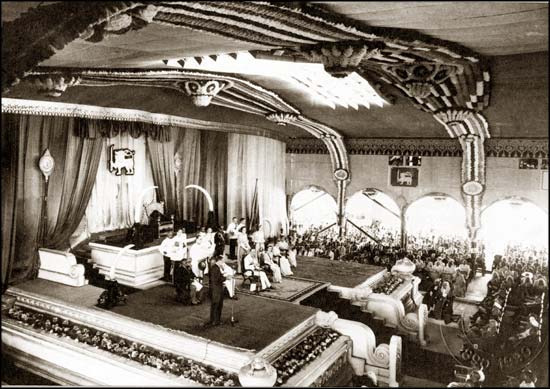
The first parliamentary elections were held in 1947, leading to D.S. Senanayake, representing the ‘United National Party,’ becoming the first Prime Minister of Sri Lanka. He is considered as the ‘Father of the Nation.’
On February 4th, 1948, Ceylon was granted independence as the Dominion of Ceylon. This dominion status within the British Commonwealth was retained for the next 24 years until the 22nd of May , 1972, when Sri Lanka became a republic and was renamed the Democratic Socialist Republic of Sri Lanka.”
Authors

Vishwa Weerasekara
Media Unit SLMSU – Exorians

Menuri Fernando
Media Unit SLMSU – Exorians
 Sri Lankan Medical Students’ Union